Wall patch and drywall · Drywall knife
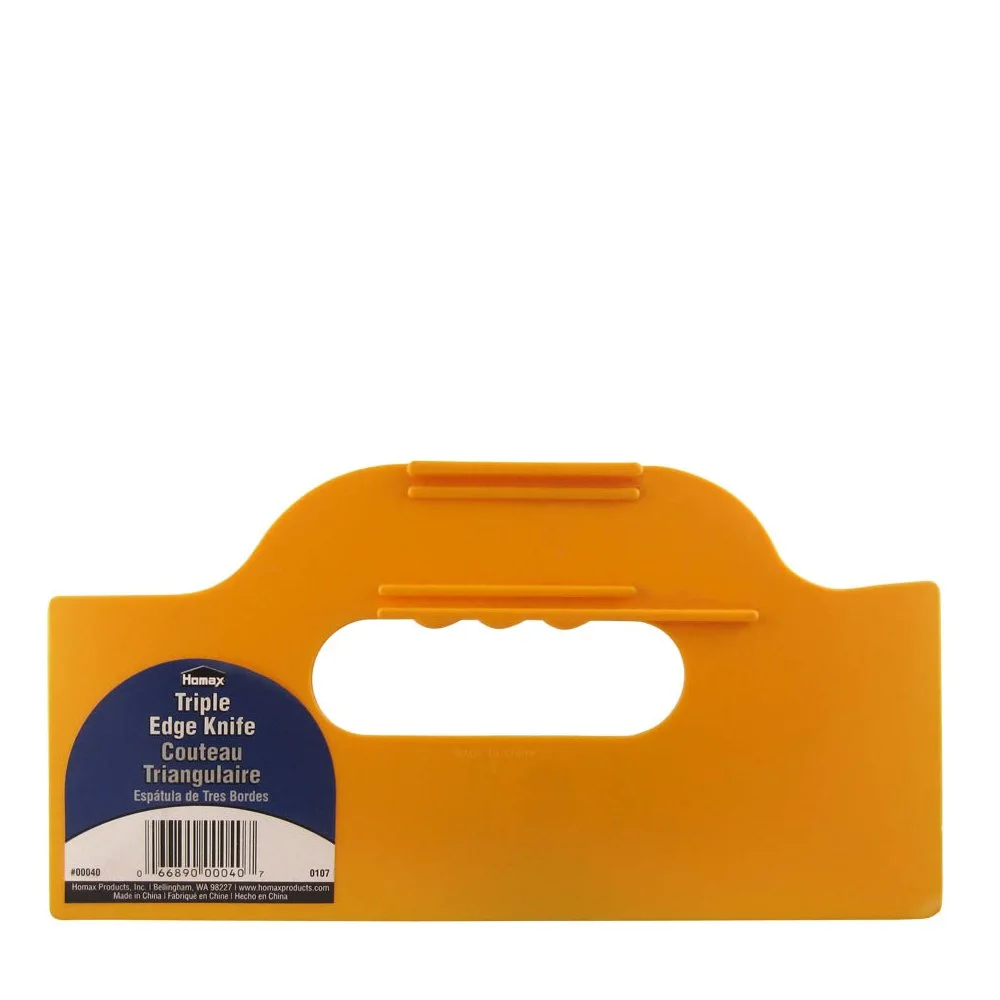
Homax 3-in-1 Drywall Knife
Best for Spreading, scraping and opening cans with one tool

Opens our retail partner in a new tab. Payment, delivery and returns happen there.
- Edges
- 10 in, 3.5 in and an 80-degree corner point
- Material
- High-impact polystyrene
Features
Features
- Long 10 inch edge for feathering wide coats
- Short 3.5 inch edge for patches and small fills
- 80-degree point shaped to fit inside corners
- Doubles as a wallpaper smoother and paint shield
- Made of flexible, high-impact polystyrene
Specifications
Specifications
| Brand | Homax |
|---|---|
| Type | Drywall knife |
| Shelf | Wall patch and drywall |
| Edges | 10 in, 3.5 in and an 80-degree corner point |
| Material | High-impact polystyrene |
For best results
For best results
- Hold the blade at a low angle for feathering and at a steeper angle for scraping off excess.
- Keep the edges free of nicks, because a nicked plastic edge drags ridges through the coat.
How to use
How to use
- Step 1Load a little compound on the short edge and press it into the patch or crack.
- Step 2Switch to the long edge and pull a wider, thinner coat across the area.
- Step 3Work the 80-degree point down inside corners to clean up the joint.
- Step 4Rinse the blade in water before compound dries on it.
About this product
One plastic blade that covers three wall jobs
You get three working edges on one triangle of yellow polystyrene. The long 10 inch side spreads and feathers compound across a seam, the short 3.5 inch side handles patches and nail holes, and the 80-degree point reaches into inside corners where a straight knife cannot sit flat.
Away from drywall, you can press wallpaper smooth with it or hold it against trim as a paint shield while you cut in. Homax molds it from high-impact plastic, so it flexes against the wall instead of gouging the paper face. It also spreads and scrapes grout and other pastes.
Compare the 3-in-1 Drywall Knife with the 14 other products on the wall patch and drywall shelf, all part of the Homax assortment.
Before you start
In a house built before 1978 the paint around the hole may contain lead. Do not dry-sand or power-sand old paint until it has been tested, mist the area and clean up with a damp cloth instead of a broom. Drywall dust itself is fine and travels, so sand with a mask on.
Other products for this job
-
Repair kit · 4 x 4 in
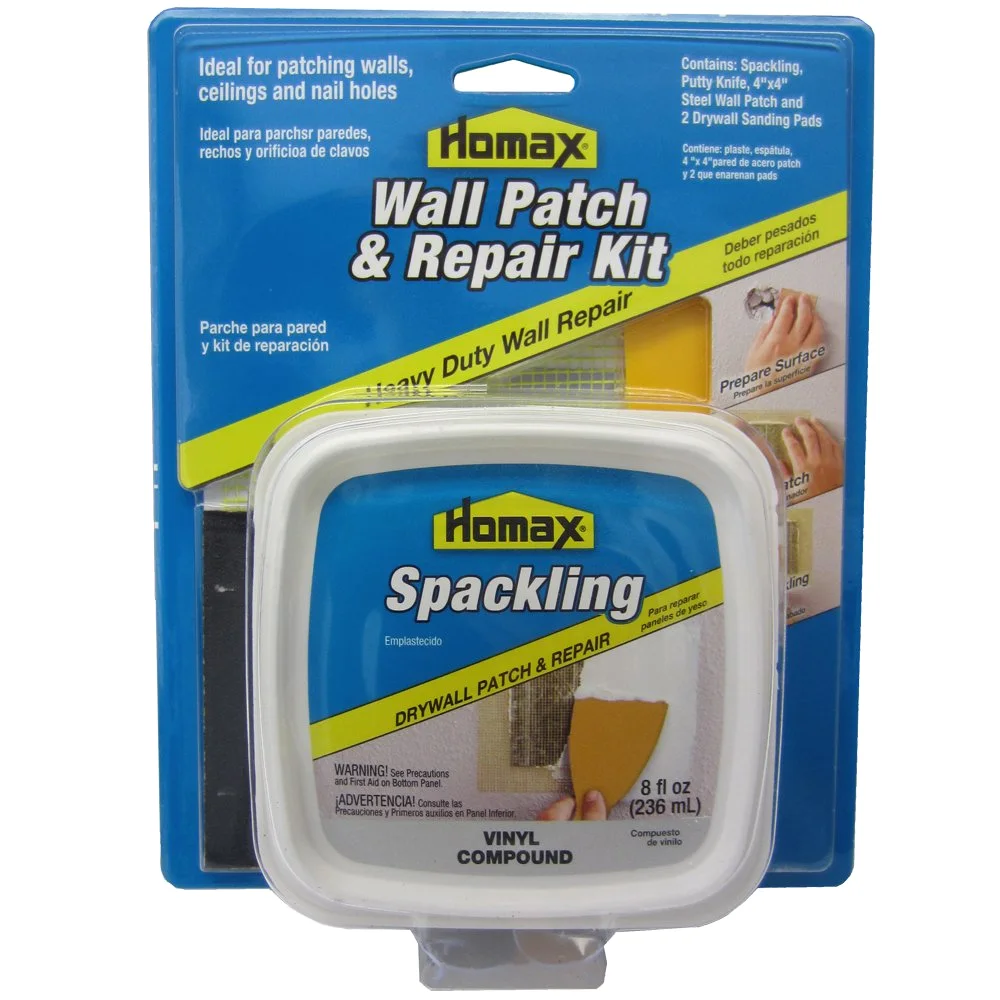
Drywall Patch and Repair Kit, 4 x 4 in
Best for: A first drywall repair with everything in one box
Regular price$9.99
-
Drywall tools
Drywall Tape and Mud Dispenser
Best for: Laying tape and mud in one pass
Regular price$50.90 -
Drywall knife
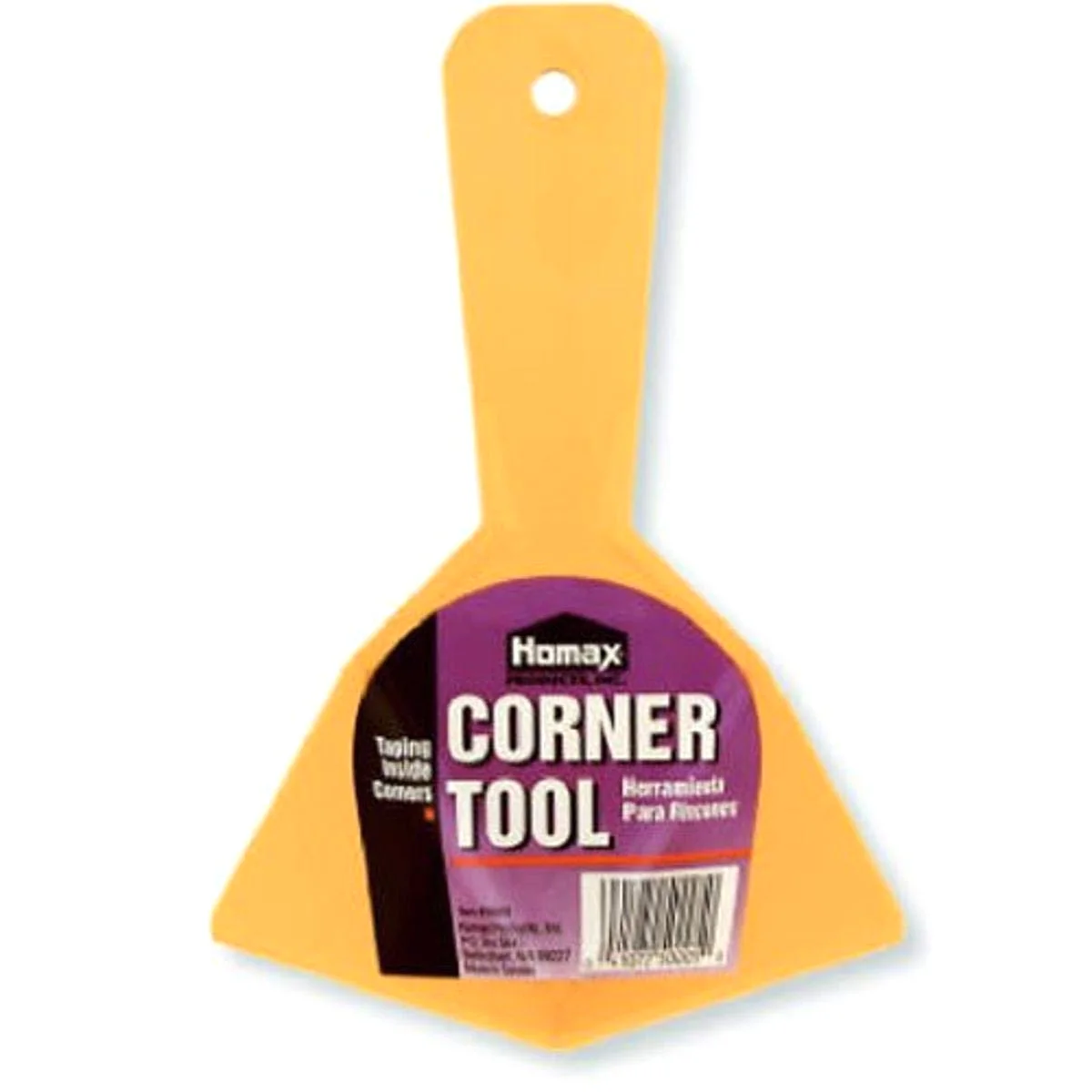
Heavy-Duty Drywall Corner Tool
Best for: Smoothing joint compound into inside corners
Regular price$4.72 -
Wall guard
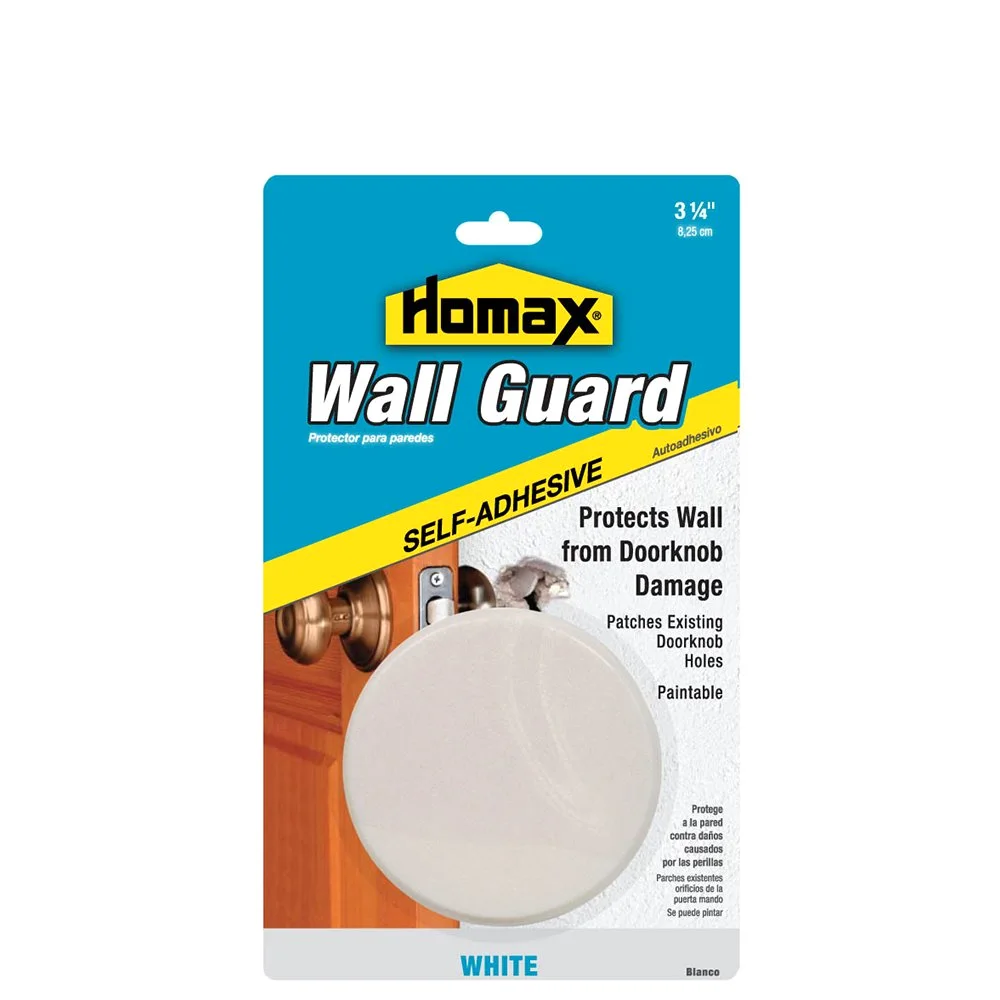
Self-Adhesive Wall Guard, 3-1/4 in
Best for: Stopping a doorknob from punching the wall again
Regular price$4.49